Many people wonder about this term. Specifically, what does syndicate mean in business? It can sound a bit confusing when you first hear it.
But don’t worry, it’s not as tricky as it seems. We’ll break it down super simply, step by step. Get ready to learn what this word means and how it works in the business world.
We’ll cover the basics and then explore some helpful examples.
Key Takeaways
- A syndicate is a group of people or organizations working together.
- They often join forces for a specific goal, like funding a large project.
- Syndicates can be found in many industries, from finance to real estate.
- Members share risks and rewards.
- They pool resources to achieve something they couldn’t do alone.
What Does Syndicate Mean In Business
When you ask what does syndicate mean in business, you’re talking about a team-up. It’s when two or more people or companies agree to work together on a project or deal. They do this because the project is often too big or risky for just one of them.
Think of it like a business potluck where everyone brings a dish and shares the meal. Each member contributes something, whether it’s money, expertise, or connections. This shared effort allows them to take on bigger opportunities.
The main idea behind a syndicate is cooperation and shared risk. If the venture succeeds, everyone involved benefits. If it fails, everyone shares the loss.
This is a key aspect that makes larger deals possible. Without syndicates, many significant business activities might never happen because the risk would be too great for any single entity.
Joining Forces for Big Deals
Businesses often form syndicates when they need to raise a lot of money. This is common in finance, where a lead bank might organize a group of other banks to provide a large loan to a company. No single bank might be able to lend that much on its own.
By forming a syndicate, they can distribute the risk. This allows them to serve bigger clients and take on more significant projects.
Another place you see syndicates is in real estate. Investors might form a syndicate to buy a large apartment building or a commercial property. Pooling their money allows them to afford a property that would be out of reach for individual investors.
They then share in the rental income and the eventual sale profits.
How Syndicates Work
The structure of a syndicate can vary. Often, one member acts as the lead or organizer. This lead entity handles most of the administrative tasks, such as negotiating terms, managing funds, and reporting to other members.
The other members, sometimes called participants or co-lenders, contribute their agreed-upon share and follow the lead’s direction.
Agreements are crucial in a syndicate. All members sign a contract outlining their roles, responsibilities, profit/loss sharing ratios, and how decisions will be made. This ensures everyone is on the same page and reduces the chance of disagreements later on.
Examples of Syndication
Consider a scenario where a movie studio wants to fund a big-budget film. It’s very expensive to make. They might form a film syndicate.
This syndicate could include other production companies, investment firms, and even wealthy individuals. Each contributes a portion of the total budget. If the movie is a hit, everyone makes money.
If it’s a flop, they all lose some money, but the loss is spread out.
Another common example is in the insurance industry. When a very large risk, like insuring a major construction project or a fleet of airplanes, needs to be covered, no single insurance company wants to take on the entire burden. They will form an insurance syndicate.
This syndicate will underwrite the policy together, sharing the premium income and any potential claims payouts.
Benefits of Syndication
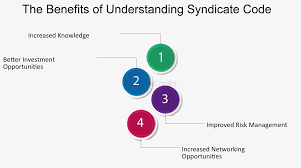
One of the biggest benefits is access to capital. Businesses can fund projects that would otherwise be impossible due to financial limitations. This allows for growth and expansion on a larger scale.
For example, a small business looking to acquire a competitor might need millions of dollars. A syndicate can make this acquisition feasible.
Risk sharing is another major plus. Instead of one entity bearing the full weight of a potential failure, the risk is distributed among many. This makes taking on ambitious projects less terrifying.
For instance, if a new technology fails to take off, the syndicate members only lose their portion of the investment, not their entire company.
Syndication also allows for pooling of expertise. Different members of a syndicate might bring unique skills and knowledge. A real estate syndicate might include members with development experience, marketing skills, and legal expertise.
This combined knowledge can lead to better decision-making and project execution.
Risks and Challenges
While syndicates offer many advantages, they also come with risks. One challenge is managing multiple parties. Different members may have different opinions or priorities, leading to conflicts.
Effective communication and clear leadership are vital to overcome this. Disagreements on strategy or how to handle a downturn can arise.
Another risk is the dependency on the lead organizer. If the lead is incompetent or acts unethically, it can negatively impact all members. This is why thorough due diligence on the lead entity is important before joining a syndicate.
Different Types of Syndicates
There are various forms of syndicates. In finance, a loan syndicate is a group of banks that jointly lend money to a borrower. A real estate syndicate is formed by investors to purchase and manage property.
In the media industry, content syndication involves selling media content to multiple outlets. For example, a news agency might syndicate its articles to various newspapers.
Another type is a securities underwriting syndicate. When a company issues new stocks or bonds, an investment bank often forms a syndicate with other banks to buy all the securities and then resell them to the public. This helps ensure the company can sell its entire offering.
Common Myths Debunked
Myth 1: Syndicates are only for huge corporations.
Reality: While large corporations frequently use syndicates, they are also accessible to smaller businesses and even groups of individuals. For instance, a group of local farmers might form a syndicate to collectively purchase expensive farming equipment or to market their produce together to larger buyers. The core principle is pooling resources for a common goal, which isn’t limited by size.
Myth 2: All syndicate members have equal say and risk.
Reality: The terms of a syndicate are defined by its agreement. While all members share in the risk and rewards, the degree can vary based on their contribution. Similarly, decision-making power often rests with a lead organizer or is based on pre-agreed voting rights, not necessarily equal participation.
Myth 3: Syndicates are always formal and complex legal structures.
Reality: While many syndicates are legally documented, some can be less formal arrangements, especially for smaller, short-term projects among trusted partners. However, even in informal settings, a clear understanding of roles, contributions, and expectations is essential to avoid problems.
Myth 4: Syndication means selling off parts of your core business.
Reality: Syndication, particularly in areas like loan syndication or real estate investment, doesn’t mean selling your primary business operations. It involves creating a separate agreement for a specific project or deal where multiple parties collaborate. Your core business remains intact.
Frequently Asked Questions
Question: What is the main purpose of a business syndicate?
Answer: The main purpose is to pool resources and share risks to undertake projects or deals that would be too large or risky for a single entity.
Question: Who typically leads a syndicate?
Answer: Usually, one member acts as the lead organizer or manager, handling coordination and administration for the group.
Question: Can an individual join a syndicate?
Answer: Yes, individuals can join syndicates, especially in real estate or investment groups, if they meet the required contribution and terms.
Question: What happens if a syndicate project loses money?
Answer: If a syndicate project incurs losses, the members share these losses according to the pre-agreed percentages outlined in their syndicate agreement.
Question: Is a syndicate a type of partnership?
Answer: A syndicate shares similarities with a partnership in that members pool resources and share outcomes, but it’s typically formed for a specific project or duration rather than ongoing business operations.
Summary
So, what does syndicate mean in business? It means a group of entities coming together for a common goal. They share the costs, the work, and the success or failure.
This allows for bigger projects and shared risk. You see it in loans, real estate, and many other areas. It’s a smart way to achieve more by working as a team.